
Clutter competes for attention in the brain. Researchers at the Princeton Neuroscience Institute found that visual clutter makes it harder for people to focus on tasks because too many objects in the environment compete for the brain’s processing power. For musicians, whose work already demands deep concentration, the condition of a room can quietly shape how ideas form, grow, and eventually turn into songs.
Creative people like to imagine inspiration as something wild and unpredictable, a lightning bolt in the middle of the night. Reality is often more practical. Many musicians work from small home studios or practice rooms where cables, microphones, notebooks, and half-empty coffee cups gather like background characters in a messy movie scene. That chaos can slow things down. In busy places such as Makkah, some artists rely on dependable Makkah residential cleaning services to keep their living and rehearsal spaces organized so they can stay focused on writing, rehearsing, and recording music.
Where Music Meets the Room
Walk into a tidy studio and something feels different immediately. There is space to breathe, space to think. Instruments sit where they belong. Sound panels are not hidden behind piles of random gear. Even the lighting matters. Warm lamps or soft natural light can make a rehearsal room feel welcoming rather than stressful.
Many musicians describe their workspace almost like another band member. It responds to them. If the room is calm, their thinking becomes calmer. If the room is chaotic, the brain spends energy filtering distractions.
Legendary producer Rick Rubin often talks about environment shaping creativity. Rubin prefers simple, peaceful studios with minimal clutter. He believes calm surroundings help artists access deeper emotions and clearer ideas. The concept may sound spiritual, yet psychology backs it up. The American Psychological Association notes that physical order can reduce cognitive overload, allowing the mind to focus on creative tasks.
Clutter Is the Enemy of the Groove
Anyone who has tried writing music while stepping over guitar cables understands the problem. Creativity requires momentum. A musician might hear a melody in their head, rush to the keyboard, and then spend ten minutes searching for a working cable or clearing space on the desk. The spark fades.
Clean environments remove those tiny barriers. Instruments remain within reach. Recording equipment stays ready. Even lyric notebooks and laptops have their place. The process becomes smooth and fast.
Some musicians joke that half of songwriting is simply “not losing your stuff.” There is truth in that humor. Organization allows ideas to move quickly from imagination to sound.
The Home Studio Reality
Modern music production happens everywhere. Bedrooms, apartments, and spare rooms have become legitimate recording studios. Affordable software and digital instruments made professional production possible without expensive studio rentals. Many artists eventually share their work online through websites or collaborative platforms, which means their creative spaces extend into the digital world as well.
For collectives planning their online presence, understanding hosting and performance matters, which is why guides like why every music collective should read this Cloudways review before launching their site help musicians understand how reliable infrastructure supports fast, accessible music platforms for fans and collaborators.
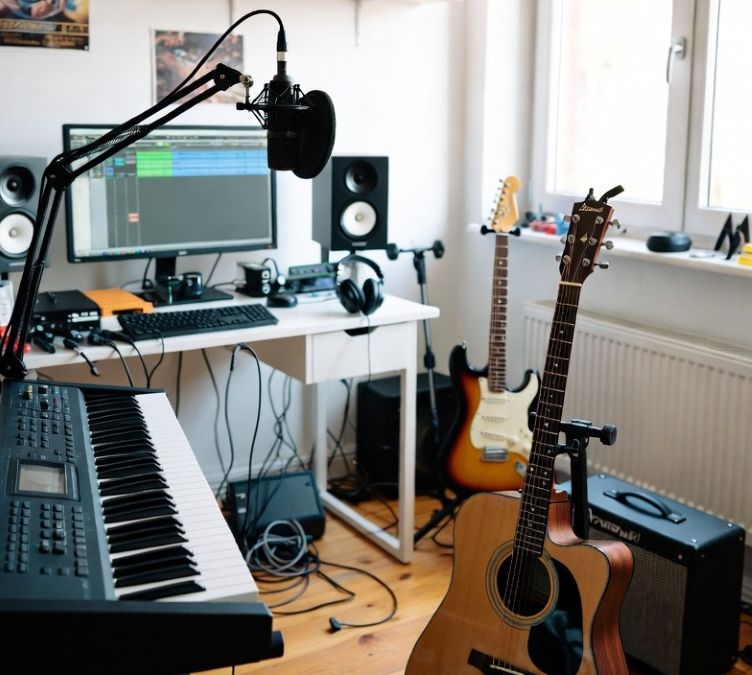
Yet the convenience comes with a challenge. Living spaces easily turn into storage zones for musical gear. Amplifiers, MIDI keyboards, microphones, and acoustic foam panels compete with everyday household items.
Maintaining order in these hybrid spaces is surprisingly important. Some musicians schedule weekly cleaning sessions, almost like rehearsals for their rooms. Others bring in residential cleaning support in Makkah to reset their environments when life becomes too busy.
Think of it like tuning an instrument. A guitar sounds better when its strings are adjusted. A studio works better when the space is balanced and clear.
Atmosphere and the Sound of a Song
Atmosphere does more than improve focus. It influences the emotional tone of music.
A cozy, organized studio can encourage softer songwriting sessions. A bright open space might inspire energetic production. Even the smell of a clean room can affect mood. Environmental psychologists often point out that sensory cues shape how people feel and think during creative work.
Musicians sometimes create rituals around their spaces. Lighting candles. Adjusting the desk. Rearranging instruments. Wiping surfaces before recording. These small actions signal to the brain that it is time to create.
And yes, sometimes the ritual begins with simple cleaning.
Creative Minds Need Clear Spaces
Artists rarely admit how much practical habits support their creativity. Fans imagine late night genius moments, guitars leaning against messy walls, notebooks scattered everywhere. Real creative work usually involves structure.
Clear desks. Organized cables. Clean floors.
Those details quietly protect the mental space where ideas grow. A clutter-free environment removes distractions and makes the creative process feel lighter.
For musicians living in fast-moving cities, dependable residential cleaning in Makkah helps maintain that balance. When rehearsal rooms and living areas stay clean, artists spend less time managing chaos and more time chasing melodies.
Music thrives in emotion and imagination, but the room matters too. Sometimes the difference between a lost idea and a finished song is as simple as a clean table, a quiet room, and a workspace that invites the next note to appear.
In the end, creative rhythm does not begin with the drumbeat. It often begins with a clear space and, for many artists, reliable Makkah residential cleaning that keeps the stage of everyday life ready for the next performance.